Monday, March 28, 2016

8 Reasons You Should Play More

We don't stop playing because we grow old; we grow old because we stop playing. 
- George Bernard Shaw
When's the last time you played? I mean, really played, like a kid at recess squeezing every last precious second out of your freedom from boring arithmetic lessons? Play is one of the most forgotten elements of being a human. Today, even kids are losing their grasp on play (though generally not through any fault of their own). Issues over children and play frequently pop up in the news, with American schools cutting down on recess time, and parents and advocates speaking out in protest of such playtime cuts, touting the virtues of free play for the mental and physical health and development of children. As a society, we seem to have lost touch with play and how integral it is to the human experience. 

But I'm assuming that if you're reading this, you're not a child, and in this post I'm primarily interested in addressing play for adults. When it comes to abandoning play, adults are the greatest offenders. Play has become an afterthought, prioritized about as much as cleaning the dust behind the refrigerator and going to the dentist. Many adults even scoff at play as something that's "for kids," suggesting that adults ought to hold themselves "above" such impractical pursuits that are done for the mere joy and pleasure of it. But I think we've got it all wrong. I think that play is not only valuable for adults and children alike—I believe it is an absolutely essential part of living a fulfilled life

So what is play? Well, it's difficult to pin down because play is, at its essence, spontaneous and uninhibited (the quintessential idea of play that comes to my mind is Calvinball, in which the only permanent rule is that it can't be played the same way twice). Play, as I see it, is something which is done for the fun of it, not for practical reasons—it is "purposeless," done for no reason other than enjoyment (though many practical benefits do derive from play by accident). In this sense, play is also very much a state of mind. The same thing can be both play or not play, depending on one's mindset. For example, a pickup game of basketball in which the focus is fun with friends would be play, whereas an NBA championship game in which the players are concerned primarily with the outcome (winning vs losing), and less so with how much they enjoy the experience, would not be play. Play can be both mental and physical, and can be done solo or with others. It is generally competitive in some capacity, even if the competition is only with oneself. Play is also a reprieve from duty and work—an opportunity to move and act and think freely, without extrinsic restraints and without obligation. Play can take countless, unique forms: anything from seeing how long you can hold a handstand, to participating in an organized co-ed basketball league, to playing "don't touch the lava" on the playground, to running through fresh snow. Regardless of what it looks like, play should be done because you want to, free from responsibility, practicality, and demand. 

It may seem a bit ironic to have a list of reasons (which in and of themselves are practical) to do something that is supposed to be done only for pleasure, not pragmatism. But we humans are funny animals, and sometimes it takes practical reasons to get us to do something that, at its core, is not supposed to be practical; so here are 8 reasons that you should start playing more, today.
  1. Play relieves stress. There are no shortage of perceived stressors in the world today. The media bombards us with daily horror stories and gloom-and-doom outlooks for the economy, world relations, and national health. In addition, work and personal finances are a constant stressor, and with our advances in technology and connectivity, the pressures of work can now follow us home easier than ever before. So how do we get a break from this stress? Play! Play gives our minds a break from thinking about the stressors of daily life, and many forms of play involve physical activity, which is known to relieve stress. Play has also been shown to reduce stress hormones and lower blood pressure. The more we are stressed, the harder it may be to find time and motive to play, but the more we truly need it. I am reminded of a great quote about meditation: "You should sit in meditation for twenty minutes every day — unless you're too busy; then you should sit for an hour." I believe the same applies to play. Think you're too busy to play? That probably means you need to play more. 
  2. Play improves our health. This one piggybacks easily on play's ability to relieve stress. Numerous studies have shown that chronic stress has catastrophic effects on our bodies, and therefore the stress-relieving effects of play will carry over into improving general health and well-being. In addition, play encourages physical activity, releases endorphins, and fosters social interaction, all of which positively contribute to our health. Studies have shown direct positive relationships between physically active leisure and physical and mental health and well-being. Other studies on play deprivation have demonstrated the tremendous influence of play on mental health, with deprivation being associated with a myriad of mental and emotional health problems such as depression, lack of adaptability, lack of self-control, predisposition to violent or addictive behaviors, and relationship problems.
  3. Play helps our productivity. This one may seem a bit outlandish at first glance, but taking time off of work to play can actually boost your productivity. A study at Cornell University found that workers were more productive when they were received reminders to take regular breaks. In addition, a study out of New Zealand demonstrated that after a vacation, workers had large increases in productivity and performance, better outlooks, and lowered heart rate. Additionally, Netflix and Brazilian company Semco have instituted "unlimited vacation" policies with great success, finding greater worker satisfaction, loyalty, and overall productivity. Whether it's a quick game of frisbee in the park, a round of "trash bin basketball" in the office, or a two week vacation to the Bahamas, more play seems to mean higher quality work.
  4. Play gets us moving. While not all play involves intense physical activity, most types of play involves some movement, and it often gets us into the great outdoors. There are volumes upon volumes of evidence demonstrating the mental and physical health benefits of regular physical activity and time spent outdoors. In a time when our rear ends spend about 90% of their time smashed into an office chair, car seat, and plush couch, we need every excuse we can find to get ourselves moving. In addition, play gives us a chance to find joy in movement. The ability to move is such a fundamental and yet oft-forgotten element of the human experience—it is a type of knowing and a way of experiencing. Yet for so many of us, the blessing of movement is squandered and ignored. Ask anyone who has lost a limb, who has lost movement or control in part of their body, who has had their ability to move permanently altered in some way, and they will tell you how much we take for granted our ability and freedom to move. Play gives us a chance to enjoy and relish in our movement. Dancing, running, dribbling, throwing, running, rolling, jumping, spinning, wrestling, balancing—our bodies are built to move, and when we play we can find joy and insight in that movement. 
  5. Play connects us to others. While some play is done solo, most involves playing with others, either in competition or cooperation. Research shows that play is of central importance in the development of social and emotional intelligence in children, and that it helps to improve cooperation, communication, and empathy. However, similar benefits extend to adults. Research on "rough and tumble" play has shown that when we play, we are able to test our relationships, to simultaneously cooperate and compete, to develop trust, and to explore boundaries. Play is very much a social activity, and it often acts as a safe space in which we can explore and develop the social skills that we rely heavily on in "real life" situations with graver consequences. Cooperative play (whether strictly cooperative or competitive against another team) teaches us how to communicate in numerous ways, helps us develop trust, and challenges us to support and encourage others. 
  6. Play fosters creativity and exercises our mind. Play is as much (if not more) a mental exercise as a physical one. Play requires problem solving and assessment of challenges and situations, it gives us opportunities to creatively find solutions, and it is a chance to simply create without the externally-imposed restrictions. The freedom of play makes it very much a creative endeavor. I often think of how children free play, making up new rules as they go and cooperating (and often competing) to develop an objective and negotiate challenges or obstacles. Play also exercises the imagination: imagining a historical event you are reenacting, imagining a new gymnastics or dance routine, or imagining a new design for a snow fort. Stuart Brown, a psychologist who has devoted his studies to the role of play throughout the lifetime of humans as well as other animals, provides considerable evidence for play's integral role in developing and shaping our brains both in childhood and adulthood. Somewhere along the way we got it into our heads that our mental abilities only grow in the classroom or with our noses in a textbook, but this couldn't be further from the truth. 
  7. Play is in our blood. Humans naturally want to play. Look at how kids behave when left to their own devices (and when not captivated by electronic devices): they sprint and jump and hang, their imaginations run at full steam, they cooperate, they engage in friendly competition, they test their physical and mental abilities, and they are unconcerned with the passage of time or stresses of life (it of course helps that kids don't have taxes to worry about). Some scientists believe that play has a role in sexual selection, and therefore tied to our evolution and development as a species. Psychologist Dr. Peter Gray postulates that play has been integral to humans developing into what we are today, with our social, cooperative, and problem-solving abilities unparalleled by anything else in the animal kingdom. Play was a large part of hunter-gatherers' lifestyle. After making a kill or gathering food, they would have unrestrained leisure time—they would play. Today, however, we are more likely to commit our "leisure" time to work-related activities, flopping in front of the television, or doing housework.
  8. Play helps us explore ourselves and the world. A large part of play is exploring the world and what we are capable of doing in this world—not because someone has asked us to, and not because we are focused on winning a competition—but because it is satisfying and we want to. "I wonder if I can swing from this branch to that one." "Let's see if I can make this basket from half-court." "I bet I could throw this stone half way across the lake." "I wonder if I could make a catapult with this scrap material I have lying around the garage." Play is a time to explore and enjoy our human abilities, physical and mental, without obligations and pressures. It is a time to get lost in just being human. And in this sense, personal growth is very much a part of play. When we play, we are not focused on becoming better, on reaching some concrete goal, or on scores or numbers or statistics. We are just focused on doing what we are doing and enjoying it. But unthinkingly, as a happy accident, we contribute to understanding the world, getting to know ourselves, and leading fulfilling lives.

Now that you've got more than enough reasons to play, it's time to forget the reasons and go play. Play should be done because it satisfies you and because you want to, not because someone on the internet told you it lowers your blood pressure or makes you more productive. Enjoy some time being detached from stress and preoccupation and thoughts about outcomes, and go be human and play!


---

Be sure to subscribe, share, and comment.
Follow me on Twitter @PSprimont and on Instagram @PSprimont

Strong of heart, strong of mind, strong of swole.

Monday, March 14, 2016

From the Hip #7 - Science and Nutrition


I believe that in this day and age, we tend to "over-science" nutrition. 

Now, before you run to grab your pitchforks, let me explain what I mean. The field of nutrition absolutely needs and benefits from scientific investigation and inquiry. Even though nutrition science is still seemingly in its early stages of growth and often subject to contradictory and see-sawing evidence (I have expressed some thoughts on this before), the scientific advances in nutrition thus far have helped humanity considerably. We are able to more efficiently, effectively, and confidently manipulate diet to improve performance, change body composition, live longer, fight disease, etc. Our lives have benefited and, I believe, will continue to benefit tremendously from scientific investigation in this field. Science is good. I love science. Please put your pitchforks away. 

However, nutrition is more than just science. Or really, I should say, the relationship between humans and our food is more than just nutrition science as we approach it. When I assert that we "over-science" nutrition, I mean that we treat nutrition strictly as a mechanical energy exchange system—a straightforward process of consumption, conversion, assimilation, biosynthesis, and excretion. We treat nutrition much like we treat fuel for our cars. People (mostly people on internet message boards looking to sound punchy and smart) love to quote the first law of thermodynamics as if it's all we need to know about nutrition. Yes, at its core, food is fuel. But our relationship with food and how it affects us is much, much more than basic thermodynamics. It's more than macronutrients and micronutrients and calories. It's more than metabolism and hormones and antioxidants. Because eating is also a fundamentally personal and emotional experience. We focus on the scientifically measurable elements of nutrition, but ignore the other half of the equation. We forget that food is more than just fuel coming out of a hose and into our engine. We forget that human nutritional habits are largely defined and influenced by ritual and emotions and spirituality. 

To your car, fuel is fuel. To you and to me, food is a tradition, a memory, a pleasure, a lifestyle, a point of pride or guilt, and all of this affects how our food affects us. Two nutritionally identical meals won't necessarily yield identical results. And this is why it's a problem when we "over-science" nutrition: we give nutritional advice and prescription to treat the machine, but ignore that the machine is a complex human. This can be frustrating, because it means that often there will not be a "right answer," or that the "right answer" might not work out as neatly of planned. But that's the nature of dealing in the human sciences. Damn these big ol' prefrontal cortexes for making us so complex.

So should we ignore the science of nutrition? Should we abandon it? Absolutely not. However, we ought to consider nutritional science and what we can glean from it in the larger context of being human. 

---

Be sure to subscribe, share, and comment.

Follow me on Twitter @PSprimont and on Instagram @PSprimont

Strong of heart, strong of mind, strong of swole.

Monday, March 7, 2016

What I've Been Reading, and So Should You - March 7, 2016

Do you have 7,000 tabs open on your Chrome browser? Have you actually read any of them in full, or are you like me and open up every interesting link you see to "read it later" and then never actually do? 

Well, in an effort to make myself better, I've been trying to actually read things instead of, you know, imagining I'll read them later and only succeeding in slowing down my browser until it eventually just gives up and crashes on me. And in the hopes that I can help you make yourself better, I'm going to share the excellent content that I've been reading (or watching, or listening to). Because let's be honest, there's no shortage of intelligent and thoughtful people sharing their thoughts and insights on life, fitness, mindfulness, self-improvement, etc. on the internet. The real challenge is picking out the ones that are worth every minute of your time. 


So here's what I've been reading, and so should you. Don't let this content die in your mass tabs grave!

The Complete Guide to Breaking Your Smartphone Habit - Brett and Kate McKay, of Art of Manliness
Smartphones are awesome. So is beer. But neither should be in your hand from the moment you wake to the moment you sleep. This article is full of eye-opening insights and practical solutions for severing your intimate bond with your fancy rectangle that you can't stop staring at. 

The Real Cause of Plantar Fasciitis - James Speck, of Somastruct
Planting fascists? Sounds dangerous! 
But seriously, plantar fasciitis is no laughing matter. This article does a good job looking at a number of likely causes and exacerbants of the dreaded plantar fasciitis. Treat yo feet right!

Side Quest Podcast - feat. Benjamin Burke - Robbie Farlow, of Side Quest Fitness
What's better than a podcast about fitness? A podcast about fitness with geek-a-licious tangents! Robbie interviews Benjamin, a manual therapist and personal trainer, as they talk about manual therapy strategies, assessing quality of movement, personal training, and music that I completely forgot existed (Taking Back Sunday... hello nostalgia, my old friend).

The Dairy Manifesto - Whole9
I always appreciate Whole9's reasonable approach to nutrition and their encouragement of self-experimentation. This (brief) manifesto on dairy gives some insights into why dairy may not be everyone's best friend. When in doubt, experiment!

The Crossfit Games Open: Let Go of the Leaderboard - Patrick McCarty, of Breaking Muscle
The Crossfit Open is in full swing, and while I am not participating in it and you may not be either, this article is full of good insights about perception, self-worth, and detachment. Detach yourself from results out of your control, embrace the process, and have some fun!


That's it for this time around. 
If you have something you think I should read, watch, or listen to, comment or tweet at me! I'm always open to suggestions. 

---

Be sure to subscribe, share, and comment.

Follow me on Twitter @PSprimont and on Instagram @PSprimont

Strong of heart, strong of mind, strong of swole.

Tuesday, February 23, 2016

From the Hip #6 - "...like it's your job."

Have you ever stopped to consider the phrase "like it's your/my job" and what it says about our culture? 

"Holy crap, I'm out of shape... I'm going to start running every morning like it's my job." 
"This new book is so good I'm gonna spend the next week reading it like it's my job." 
"If you really want to lose weight, start following a balanced diet like it's your job." 
"I feel like I haven't spent any time with my wife in weeks... I'm going to spend start spending time with her like it's my job." 
"Man, he's chowing down on that burrito like it's his job!"

What's the message here? That "your job" is the most significant thing in your life, apparently. Any time I've heard this phrase used, it's applied to something personal: a personal fitness goal, personal health, a passion project, an enjoyable hobby, a personal venture started long ago. Lurking behind this phrase is this idea that personal endeavors should be secondary to our "job"—that whatever it is, it's not that important unless it's making us money, or unless someone with a bigger salary and fancier title than us is telling us to do it. Is that how we want to live? Is that the metric by which we wish to define importance? I, for one, believe that we ought to be prioritizing ourselves, our health, our passions, what we care about, what we believe in, what satisfies us and enriches our lives to the greatest degree. You should be doing what you do because you want to. Turn the tables on how you perceive what's important. If you really want to commit your efforts to something, tell yourself and your friends that you're going to "start running every morning like it's my passion," not "...like it's my job."

---

Be sure to subscribe, share, and comment.

Follow me on Twitter @PSprimont and on Instagram @PSprimont

Strong of heart, strong of mind, strong of swole.

Sunday, February 21, 2016

Why BMI is B.S.

Confession: I'm overweight. Clarification: I'm overweight according to a flawed metric

I remember the resentment I felt during a physical evaluation for life insurance a few years ago: just before stealing what felt like a few gallons of blood from my arm (I survived, but barely), the nurse hurriedly measured my height and weight. 

"Hmm, weight, looks like 198, height, just over 5'11. Okey doke!" and that was the full extent of body composition measurements taken. 
As she wrote down the numbers on her sheet and I envisioned my monthly insurance rates ticking upwards because of how "overweight" I was, I wanted to say, "ahem, so, wanna see my abs? I'm pretty fit." ...but that might have made things a bit weird. 
See, I did not have, nor have I ever had, a high percentage of body fat (what the BMI purports to indirectly measure). Yet my BMI came in at 27.6 on that day, squarely in the "overweight" zone.

The problem is, though a higher BMI certainly can (and frequently does) correlate with higher body fat, it has the potential to give woefully inaccurate measures of actual body fatness. And yet, this cursory (at best) measurement of height and weight is par for the course. Yes, in more specialized settings there will certainly be more body composition measurements taken; but for most of you, your tailor probably knows more about your body composition and implicated health risks than your doctor or health screener does. And that's pretty bogus, given that BMI is used for things like published globalnational, and local health statistics, insurance rates, general health screenings, prediction of health risks, medical advice, and more. 


So what's wrong with BMI? Why do I take issue with its widespread use? Let me explain.

1. First, a bit of history...
The formula for BMI was first introduced in the early-mid 1800s by a mathematician, statistician, astronomer, and sociologist named Adolphe Quetelet, and the term BMI (body mass index) was popularized in the mid-late 1900s by Ancel Keys, who determined BMI to be the preferred measurement for body composition in population studies (at least, when compared to another arbitrary and oversimplified measurement). Quetelet (who, I will reiterate, was not a medical professional nor a physiologist) himself warned that his method was not perfect, and that it was more of an estimation based on trends in body composition at that time and place; and Keys determined BMI to be satisfactory for population studies, noting that it should not be used to assess individuals. And yet, here we are. 

So, our most widely used body composition metric today is a 200-year-old quick and easy "eh, it works out in a pinch" formula developed by a mathematician. Seems legit.

2. It can be very, very inaccurate. 
Here are some pictures of overweight people, according to BMI: 
Lebron James / BMI: 27.4 / Overweight
Just look at that chubby face! 1
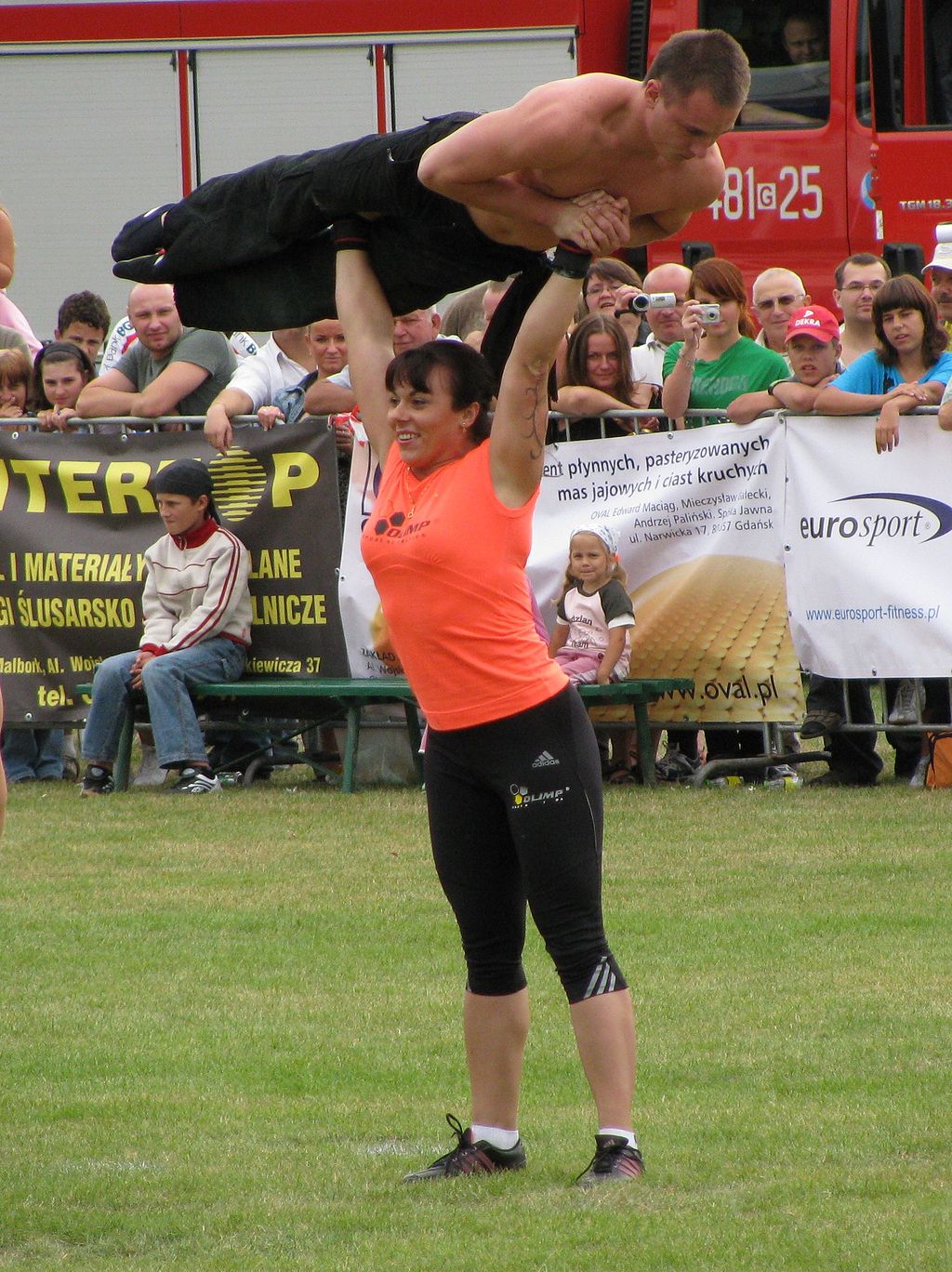
Aneta Florczyk / BMI: 27.5 / Overweight
Go on, say it to her face, I dare you. 2
Rich Froning / BMI: 29.5 / Overweight (almost obese)
Abs, fat folds, same difference. 3
Okay, how about some obese people. They're bound to be at least a little chubby, right?
Dwayne Johnson / BMI: 30.8 / Obese
Soft and jiggly like a rock (get it?). 4
Brock Lesnar / BMI: 36.9 / Obese
He heard what you said. 5
Ronnie Coleman / BMI: 41.4 / Morbidly Obese
8x Mr. Olympia is morbidly obese. Sure. 6
So, in case the point is not yet abundantly clear, BMI has the potential to give very, very misleading results. Athletes, particularly strength and power athletes, tend to have higher bone density and much greater muscle mass than sedentary populations, and therefore have BMIs that suggest much greater body fatness than they actually have. 

So what, some athletes have misleading BMIs and pay a little more for life insurance and skew statistics a bit... But most of us aren't professional athletes anywayswhat's the big deal?

Well, first off, this doesn't apply just to a few pro athletes. I'm about as average as they come athletically, and as mentioned above, I am classified as overweight. With the rising popularity of sports like weightlifting, powerlifting, and Crossfit in otherwise "ordinary" populations, more people are packing on extra muscle to their frame and becoming "overweight" and "obese" as they exercise more. Yes, exercise might make you "overweight" or "obese"you heard it here first.

In addition, it's not just the more muscular crowd that's affected. BMI can be incredibly inaccurate in the other direction as well. BMI measurements are very likely to underestimate body fatness. The New York University School of Medicine conducted a cross-sectional study in which they compared BMI measurements with the results from a DEXA scan (which is arguably the most accurate method of measuring body composition) in a group of adults. The study found that while BMI classified 26% of the participants as obese, 64% of the subjects had obese levels of body fatness according to the DEXA scan. In all, 39% of subjects who were not considered obese according to BMI were found to be obese according to the DEXA scan. In addition, the BMI measurements were considerably more likely to misclassify women than men (48% vs 25% misclassification). Additional studies have shown similarly dismal results for the accuracy of BMI in correlating to actual body fatness and predicting disease. 

Now, look around the internet and see just how many population health studies and statistics are based on BMI (I'll just tell you: it's almost all of them). All of those studies and statistics could be immensely inaccurate and the implications misleading. Example: according to the CDC, just over 1/3 of the American population is classified as obese. What if that number was more like 60-70%? If the inconsistencies found in the NYU study are any indication, this may be closer to the truth.

To make matters worse, studies have shown that being "overweight" according to BMI was not associated with increased mortality, and another demonstrated that among patients with coronary heart disease, those who were underweight or normal weight had the highest risk for mortality, while those who were overweight had the lowest risk for mortality, and moderately obese patients had no increased risk for total mortality. (Please note that this does not mean we should all try to get fatter because that's healthier. These studies merely suggest that BMI alone does not accurately predict body fatness and therefore disease and mortality risks.)

False positives on the one hand, false negatives on the other hand, false implications about health risks in both handsregardless of how you look at it, BMI doesn't inspire much confidence. 

3. It ignores most of the factors that affect body weight and composition.
BMI assumes a relatively equal body type for equal heights and weights. But look around next time you're in public and note the massive variability in body type. Two people who are built similarly don't necessarily weigh the same, and two people who weigh the same aren't necessarily built the same. When looking at how BMI is measured, you have to ask: What about people with higher or lower bone mass (bone is about twice as dense as fat)? How about those with higher or lower muscle mass (muscle is about 5/4ths as dense as fat)? What about variations in frame size? Body type differences by gender? Inherent variations in healthy levels of body fat by gender? Variations in body shape and proportions that come with age? Waist size? What about amputees? BMI ignores all of these factors. 

4. It's arbitrary.
Weight (kg) divided by height (m) squared. That's the formula for BMI. What's the magic of weight divided by the square of height? Well, nothing. Quetelet looked at trends in body weight/height and body composition and constructed a formula that very roughly correlated. In addition, the rigidity and the arbitrary nature of this formula (because squaring the height really has no real-world basis) means that BMI tends to overestimate the body fatness of taller individuals and underestimate the body fatness of shorter individuals. Nick Trefethen, an Oxford mathematics professor, has suggested a formula of 1.3*weight (kg) divided by height (m) raised to the 2.5th power as a more accurate measure than the traditional BMI formula, though he recognizes the absurdity of doggedly sticking to overly-simplistic metrics for complex things like body composition, and proposes it only as a somewhat better alternative to an inherently flawed metric. 

Most arbitrary of all is the rigid categorization of "underweight," "normal weight," "overweight," and "obese." What makes someone suddenly obese (and subject to all the risks of obesity) when the decimal point of their BMI ticks from 29.9 to 30.0? In addition, these numbers have varied considerably over the years as different governing bodies have changed what they think qualifies as "underweight," "normal weight," etc. The absurdity of this all should be evident by now. But apparently the CDC, insurance companies, and much of the medical community don't give a damn about that. We sent a man to the moon almost 50 years ago, and yet we're still cool with using a 200-year-old, over-simplified, and arbitrary metric as our primary method for measuring body composition and predicting health? 

5. It rests on assumptions about body type.
Put simply, BMI assumes a particular body type for everyone (specifically, an unfit and sedentary body type). Not only does body type vary immensely from person-to-person, but it also varies with geographical location and over time. To give credit where it's due, some national and international organizations do try to adjust for this by setting their own cut-off points; however, these distinctions are often arbitrary themselves, and have the downside of muddling the results of long-term longitudinal studies or global comparisons. 

6. It's a statistical, population-based measurement that we consistently use to assess individuals.
Need I say more?

7. There are a number of more accurate measures of body composition and predictors of health complications.
At this point, there really is no reason to use BMI. Yes, it's convenient and easy and you can make the kids in a high school health class memorize the formula. But we have countless other methods that do their job far better than BMI. Of course we have precise metrics such as DEXA scans and lipid profiles that can give accurate and detailed assessments of numerous health factors. However, to get an accurate assessments of body composition and health, we don't always have to lean on high-tech, high-cost procedures. I won't get into all of the alternative methods here (there are plenty), but there's one that stands out in particular. Remember how I mentioned your tailor probably knowing more about your body composition and health risks than your health screener or doctor? That's because numerous studies have demonstrated a much higher accuracy of waist circumference, waist-to-height ratio, and waist-to-hip ratio in the prediction of all-cause mortality, disease risk, etc. These findings are significant considering how easy it is to measure waist and/or hip circumference. Using waist-to-height ratio or a similar measurement in health screenings, medical check-ups, and statistical analyses requires virtually no additional cost, training, or time, and yet it would vastly improve the accuracy of our population health studies and individual health assessments. 


It's time to say bye-bye BMI, and I'm certainly not the only one to be saying this. Countless doctors, health professionals, health organizations, and reasonable people are realizing the massive shortcomings of using BMI as our standard of body composition and health risk assessment. Perhaps someday the global health organizations, standard-setters, and governing bodies will catch up with the blog-osphere and change their ways. 

---

Be sure to subscribe, share, and comment.
Follow me on Twitter @PSprimont and on Instagram @PSprimont

Strong of heart, strong of mind, strong of swole.


1 By Steve Jurvetson (Flickr: LeBron James) [CC BY 2.0 (http://creativecommons.org/licenses/by/2.0)], via Wikimedia Commons
2 By Artur Andrzej (Own work) [CC BY-SA 3.0 (http://creativecommons.org/licenses/by-sa/3.0) or GFDL (http://www.gnu.org/copyleft/fdl.html)], via Wikimedia Commons
3 By Lance Cpl. Derrick K. Irions [Public domain], via Wikimedia Commons
4 (Wikipedia:Contact us/Photo submission) [CC BY-SA 3.0 (http://creativecommons.org/licenses/by-sa/3.0)], via Wikimedia Commons
5 By Miguel Discart [CC BY-SA 2.0 (http://creativecommons.org/licenses/by-sa/2.0)], via Wikimedia Commons
6 www.localfitness.com.au. [Attribution, CC BY-SA 3.0 (http://creativecommons.org/licenses/by-sa/3.0) or GFDL (http://www.gnu.org/copyleft/fdl.html)], via Wikimedia Commons

Monday, February 15, 2016

From the Hip #5 - Big Changes Make Big Changes

When it comes to health and fitness, people tend to look for "the solution" to their ailments or "the step" to health and wellness. Basically, this comes down to laziness. It's a case of "okay, I acknowledge that I need to improve my health, and I guess I'm willing to do one thing to fix it, but that's it." The reality of the matter, though, is that there is no magic bullet. Health and fitness are not one-step, one-solution matters, and that kind of thinking is, frankly, foolish. Do you really think that the status of your health and fitness is going to do a complete 180 because you started eating some açaí berries? 
It's much bigger than that. It is a product of all aspects of your lifestyle. To varying degrees, every single thing you do contributes to your health and wellness. To make sweeping change (in your health, fitness, etc.), you must make sweeping change in your life choices. The magic bullet mindset is a massive detriment to anyone who falls into its trap (and a massive money-maker for supplement, "health food," and drug companies who love to sell you their proprietary secret pill or powder or superfood to give you everlasting life and superhuman performance). This mindset keeps us bouncing between feelings of erroneous and misdirected hopefulness and feelings of resigned hopelessness: we enthusiastically try whatever magic bullet Dr. Oz or our friends' Facebook feed is featuring this month, find that it makes no appreciable difference in our life, give up on self-improvement, continue with our old habits and feel helpless and powerless, see an add for a new magic bullet, and wash-rinse-repeat. 
I guess "take responsibility for your own health, make better decisions, and put in the hard work every day" just doesn't have the same selling power as "drink this juice and you'll be a living god!" 
We all know that making massive turn-arounds is possible. We've all heard the stories of people who went from being obese and tumbling towards death's door to being healthy, active, and happy. We've all heard stories about recovery from disease, about turning life around and walking away from addiction, about regaining health and fitness against all odds. We know it's possible. We just need to accept and embrace that it takes more than a magic bullet. Big changes make big changes. 

---

Be sure to subscribe, share, and comment.

Follow me on Twitter @PSprimont and on Instagram @PSprimont

Strong of heart, strong of mind, strong of swole.

Friday, February 12, 2016

How to Make Your Feet More Awesome

Our feet have become dulled and sluggish. For most of us today (or at least those of us who are likely to be reading this), our feet are encased in a cast of sorts from birth until death. Out of the womb and into a pair of “supportive” shoes. In addition, most of us carry out our lives primarily indoors. Our feet live on flat, solid, uniform, and predictable surfaces; and on the occasion that we do present our feet with an irregular surface by going on a mountain hike, doing some outdoor labor, or going for a walk in the woods, most of us take this occasion to strap our feet into the thickest, most protective, restrictive, and sense-deadening boots we can get our hands on. All of this results in our feet becoming unaware, inexperienced, unadaptable, dull, atrophied, and dysfunctional. 

Think of a parallel situation: from birth, you have a thin cloth draped over your eyes. The cloth obscures visual detail and filters out most light. How adept will your eyes be at making out details and adapting to various levels of lighting? Or take the mind for example. If you live your life never being mentally challenged, never having to analyze and make sense of unfamiliar ideas, never having to push yourself to learn something new, how much mental acuity are you likely to display in the face of even a moderate mental challenge? The same principles hold true for the feet. 
(For another interesting example, we can look to the infamous "cavefish," which dwells in deep/dark waters and has evolved to have non-functional or minimally-functional eyes, a more extreme case of the "use it or lose it" adaptations that can take place over an extended length of time.) 

Nerves on nerves.1 
The structure and function of the human foot is an absolutely incredible feat (hah!) of engineering. Capable of easily handling incredibly high loads and forces, but also of very delicate and precise movement, our feet can be both strong and dexterous. The feet are one of the most heavily innervated parts of our bodies, and with good reason. As bipedals, almost any sort of ambulation we do starts from our feet. Our ability to move, our ability to execute precise movements, to accelerate, decelerate, and change direction, our physical perception of our immediate surroundings, our standing balance, our ability to lift, throw, jump, run—it all originates from the feet. The feet are our primary connection to the earth. And yet, along with the hands and neck (two other enormously important parts of the body) they tend to remain largely ignored and untrained in the fitness community, even among high level athletes. When you step back and think about it for a moment, this makes no sense—training the rest of the body intensely while ignoring the feet is like putting bicycle wheels on a Ferrari. But I guess it’s just not sexy enough to have strong feet. 

So what about this footwear business? Isn’t this 20+ billion dollar industry that makes well-engineered, highly-protective footwear supposed to make our feet invincible, high-performance machines? The greatest irony of all is that in addition to our feet being largely untrained and incapable, our best efforts to preserve them in a protective casing 24/7 have been mostly unsuccessful. Foot pain and dysfunction are hugely prevalent over a lifetime, for active and sedentary populations alike. Population studies have found regular and/or ongoing foot pain in - of the participants, with higher prevalences among sedentary populations 2 3 4 5. That should be baffling to you. Sedentary populations—people whose feet are “challenged” only to saunter from the couch to the car to the office chair and back to the car every day—are having high incidences of chronic foot pain. 

In order to combat this wholesale atrophying of our feet and optimize our physical performance, function, and health, the feet need to be used in a way that allows the senses to be stimulated, that allows the structures to move through a full range of motion, that challenges the joints and muscles to move over irregular and unfamiliar surfaces, and that strengthens the muscles and joints. Unfortunately, this does not happen in daily life for most people. Therefore, we must put intentional effort into training our feet, just as we train our legs, our core, our shoulders, our lungs, etc. We must challenge our feet more. This can take numerous forms, and I am by no means an expert on podiatry; however, there are a few simple things we can start doing to build up the strength and “intelligence” of our feet.

1. Start slow and be sensible. I’ll start with this, because it really precedes and applies to all of the other suggestions about training your feet. If you’ve spent the last 30 years of your life wearing thick, “supportive” sneakers, it’s not a good idea to throw them away and start going on 10 mile barefoot hikes through the mountains right away. Start slower and more conservatively than you think you’ll need to, and be sensible about it all. Also remember: this isn’t about making your feet macho and tough by walking on shards of broken glass and climbing Everest in sandals. It’s about restoring function and optimizing performance. Now that we’ve cleared that up...

2. Ditch your shoes when safe/possible. Shoes do provide necessary protection in many cases, and some special medical circumstances require shoes to be worn at most/all times. However, for most of us, we’d be better off ditching our shoes and going au natural more often. Shoes, particularly dress shoes, boots, and running shoes designed for more “support,” tend to have three main detrimental effects on the feet. 
    1. First, shoes provide a thick barrier that dulls sensation and removes your connection to the surface you’re standing/walking/running on. Have you ever had thick winter gloves or work gloves on and tried to do a task that requires a bit of precision and fine motor control with you hands—something like tying your shoes, digging your keys out of your pocket or bag, or using a small tool—and found the task nearly impossible? Having shoes on our feet has a similar effect, and keeping the feet encased in shoes all the time has a lasting impact on our feet’s ability to perceive and make sense of its surroundings, and to perform precise movements or adjustments that should be relatively easy.
    2. Second, shoes often overprotect. Don’t get me wrong, the protective abilities of modern footwear are a wonderful advancement (no hookworm for me, thank you very much), and absolutely necessary in some cases. I would much rather wear some thick boots at a construction site than have a nail through my foot, or wear winter boots than lose my toes to hypothermia. But for surfaces that are not outright dangerous, there’s no need to wear shoes. Having shoes on all the time makes our feet weak and wimpy. You should be able to walk on coarse sand, grass, and cement without pain.
    3. Third, shoes often restrict movement, encourage poor positioning/movement patterns (such as the heel-strike), and limit the development of foot strength. Like a mold or a cast, your shoes will, over time, change the shape of your feet. In addition, the shape of your shoe affects your gait, your joint movements, your positioning, and how the muscles of the foot, leg, and hip are used. The most common shoe design is to have an elevated heel—dress shoes, running shoes, boots, even sandals all tend to have this design to varying degrees. In addition, many shoes (particularly traditional running shoes, heavy boots, and really fancy-shmancy dress shoes) have a toe spring: a sole that is molded to have an upward curve in the front, intended to allow the shod foot to “roll” from toe to heel rather than having to (*gasp* God forgive) bend at the toes when you walk/run. To make matters worse, most shoes (dress shoes and women’s shoes in particular) run narrow in the toe box, squishing your forefoot and putting your poor toes in a crunched-up position. Over time, this literally changes the structure of our feet, and can lead to bunions, ingrown toenails, overlapping toes, as well pain and a change in gait and foot function. This devious combination of elevated heel, toe spring, and restrictive forefoot design gradually shortens the length of the heel cord and posterior lower leg structures, puts your toes in a constantly extended position, prevents the toes from gripping the ground, puts extra stress on structures of the underfoot, limits the muscular and other soft tissue involvement in movement and shock absorption, forces a heel-strike, and makes your foot and ankle an all-around inflexible, weak mess. 
So, when you’re in your home, at the park, at the beach, in your backyard, going for a short walk, doing a workout, etc., ditch your shoes and let your feet move and feel, unrestricted and uncontained. And in situations where going without shoes would be unwise—on hot summer days when the ground is 115°F, when you’re going on a hike through heavily wooded areas, when trudging through 3 feet of snow, when making a presentation to the board of directors, etc.—I suggest that you...

6
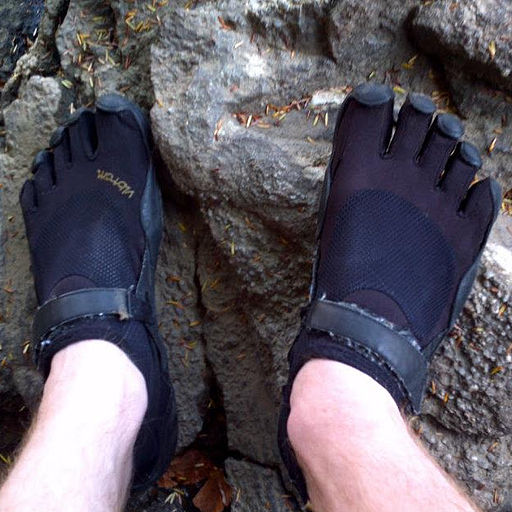
3. Go minimalist. Fortunately for all of us, the minimalist footwear movement is gaining more and more traction every day, and this means more and more minimalist footwear options becoming readily accessible (and some even look kinda normal!). There are a few main things to look for in minimalist footwear:
    1. A flat sole. Always remember: flat butts are bad, flat soles are good. The heel-toe drop should ideally be 0mm, but if you’re just working your way into minimalist shoes, a slight heel-toe drop (<4mm) is fine to start out.
    2. A thin, flexible sole. Just having a flat sole isn’t enough to make it minimal (sorry 1990s, your weird Spice Girls platform shoes don’t count). You want a thin sole that allows you to have some ground feel, and a flexible sole that allows your toes to bend just like they would if you were barefoot. The application of the shoe will determine some of these qualities (for example, minimalist boots will generally have a slightly thicker sole), but in general, the more minimal the better.
    3. No/minimal “arch support.” Yes, you should probably throw away all of your preconceived notions about arch support. “But what about my poor arches?! Won’t they collapse into a heap of skin and bones and sadness if they don’t have support 24/7?” I don’t know, does your head flop around side-to-side because you don’t wear a neck brace 24/7? Do you need to wear a reinforced cage around your torso to keep your upper body from collapsing? There are certainly some more extreme medical circumstances in which some form of arch support or orthotic can be beneficial, but for the average person, all arch support does is allow the structures that naturally form your arch (which has an important function, by the way) to get lazy and go dormant. Most people don’t need arch support. They need stronger and more functional feet.
    4. An adequately wide toe box. The toe box should be wide enough that your forefoot/toes are not being compressed in any way when your full weight is on that foot. Toes need room to splay. If your toes are scrunched together or bursting out of the sides of your shoes when you walk, the shoe isn’t wide enough.
    5. Thin, flexible upper. This one’s pretty self explanatory. Your shoes should be able to move the way your unshod foot moves, so a relatively thin, flexible upper will be necessary so as not to restrict movement.
    6. Sturdy construction. Because your minimalist shoes will have less material than your standard running shoe, it’s important that you get a pair that is well constructed and uses durable materials. Otherwise, you’ll be wearing through your soles every few months, and then you’ll have no choice but to go barefoot. 
    7. Something you’re willing to wear. There’s no point in
      buying a new pair of minimalist shoes if you’re too embarrassed to wear them. I would say, first off, that you
      should not be embarrassed of taking care of your body and being an efficient, high-performance human being, even if it means your shoes look a bit different. But if those weird toe-shoe-foot-glove things aren’t quite your style, that’s fine! There are enough options out there that everyone should be able to find a shoe that suits them. It’s easy to find any style of minimalist shoe, from trail shoes to crosstrainers to huaraches sandals—there are even some pretty stylish minimalist dress shoes and boots out there, so you can look dope and move right. 
Again, let me remind you to start slow and be sensible with your minimalist footwear. If you’re a marathoner and you’ve been wearing traditional running shoes and heel-striking for your whole life, strapping on a pair of ultra-thin sole, 0mm drop minimalist shoes and going for a nice easy 20 mile jog will not go well. Do your research, recognize that you will need to relearn your running form. Start by walking in them for a few weeks, then jog a lap around the track, then go for a mile, etc. Going barefoot and wearing minimalist shoes can have tremendous benefits for your foot health and function, unless you do something stupid and get stress fractures and destroy every ligament in your foot on day one. 
A - Good (though could possibly be wider). B - Bad! Toes should splay, not squish. 7

4. Challenge your feet more. This, in my opinion, is the most fun (and often most overlooked) part. Take off your shoes and find ways to make your feet work, to give them new challenges. Once you’ve gotten used to walking around barefoot, you can start with something like walking or running in the sand. Sand is excellent because it’s both relatively forgiving and quite challenging to your feet. The uneven and unsturdy ground challenges your feet to move at different angles, to feel the ground and adjust to shifting surfaces, to push, pull, grip, and spring in a constantly changing environment. If you’re a runner, study up on barefoot running form (Google forefoot/midfoot strike running form, Pose method, etc.). Look for opportunities to strengthen your feet, to move across uneven surfaces, to move nimbly. Grip the ground when you’re walking barefoot. Walk around the house on your toes for a few minutes per day. Jump. Climb a tree. Go on a mountain hike and hop around from rock to rock like a happy little mountain goat. Pick things up with your toes. Practice balancing on odd objects like rocks and logs. Walk through the woods as silently as you possibly can. Play “don’t touch the lava” in your house or at the playground. Hop around on one leg. Play some frisbee barefoot in the grass. Give your feet a good massage with a lacrosse ball every day and practice some yoga poses that stretch your foot/ankle musculature and challenge stability and balance. You can be really scientific and precise about it if you’d like, or you can just have some fun with it do whatever you feel like—either way, challenge your feet regularly and they will benefit from it. 


Whether you’re a professional athlete or just trying to stay healthy and live a good life, chances are that you’re not giving your feet the love they deserve. Challenge your feet more and force them to become better. Optimize your performance from the ground up!

---

Be sure to subscribe, share, and comment.
Follow me on Twitter @PSprimont and on Instagram @PSprimont

Stay swole.


1 By Dr. Johannes Sobotta [Public domain], via Wikimedia Commons
2 http://www.sciencedirect.com/science/article/pii/S0304395911005616
3 http://link.springer.com/article/10.1186%2F1757-1146-1-2
4 http://www.ncbi.nlm.nih.gov/pubmed/6115797
5 http://www.ncbi.nlm.nih.gov/pubmed/20382520
6 By Seth Cochran (Own work) [CC0], via Wikimedia Commons
7 By Ada S. Ballin (Science of Dress, to face of page 240.) [Public domain], via Wikimedia Commons